
Don’t Ignore the Early Warnings of AC Failure
Nearly 75% of major air conditioning breakdowns happen because early warning signs were ignored for too long. If you are looking for reliable home maintenance tips and troubleshooting, the most valuable lesson you can learn is how to catch small issues before they snowball into an expensive emergency. The average central air conditioner has a lifespan of 15 to 20 years with proper care, but neglecting minor symptoms will drastically cut those years short.
Many homeowners assume that if cold air is still coming out of the vents, the system is perfectly fine. Here is the thing: your equipment is incredibly tough, but it will eventually show signs of mechanical stress. With sudden local weather fluctuations and rapid temperature spikes, your HVAC system is forced to handle maximum loads almost overnight. That sudden strain turns minor wear and tear into a full system breakdown, leaving your house uncomfortably warm.
Ignoring a strange noise or a weak breeze from your vent today often leads to premature compressor failure tomorrow. If you want to keep your system running smoothly and avoid uncomfortable indoor temperatures, scheduling professional HVAC services is the best way to catch these hidden problems early.
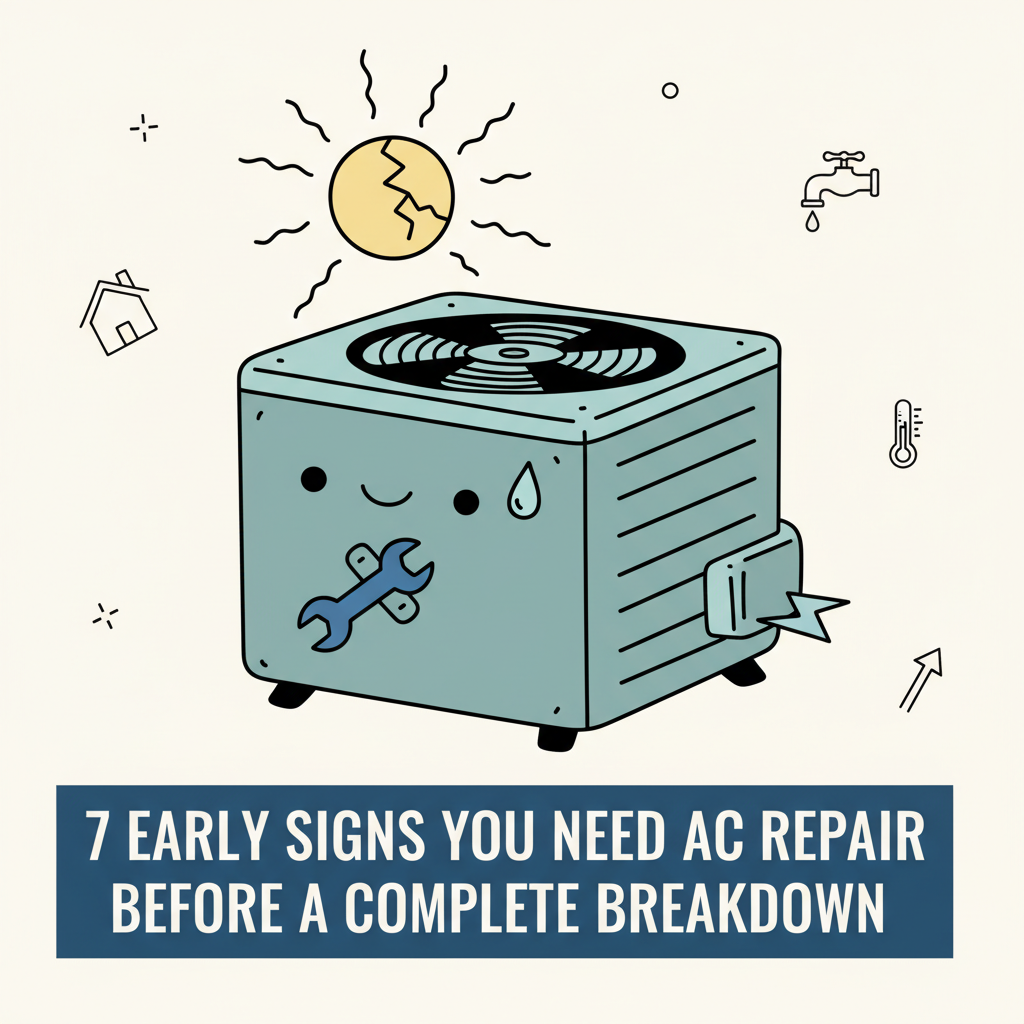
7 Signs Your AC Needs Repair
Your air conditioning system rarely fails without warning. It will almost always give you a few subtle hints that a mechanical or electrical issue is brewing. Catching these symptoms early is the key to keeping repair costs low. Watch out for these seven common warning signs:
- Warm air blowing from vents: If you feel warm or room-temperature air coming from your registers even when the thermostat is set to cool, you have a problem. This usually points to a failing compressor or restricted airflow, meaning your system is running but failing to remove heat from your home.
- Weak or poor airflow: Sometimes the air is cold, but it barely trickles out of the vent. Weak airflow makes it impossible to cool your home evenly. This symptom often traces back to a failing blower motor, a heavily clogged air filter, or significant blockages inside your ductwork.
- Frequent or short cycling: Your air conditioner should run in steady, consistent cooling cycles. If it turns on, runs for just a few minutes, and immediately shuts off, this is called short cycling. It places massive strain on your equipment and drives up your monthly energy bills.
- High indoor humidity: Part of an air conditioner’s job is pulling excess moisture out of the air. If your house feels sticky, clammy, or excessively humid while the system is running, your equipment is losing its cooling capacity and needs professional attention.
- Water leaks around the unit: A small amount of condensation near the drain pipe is normal, but active puddles or dripping water inside your home are not. Leaks usually indicate a blocked condensate drain line or a frozen evaporator coil that is rapidly melting.
- Unusual noises: Your system should operate with a steady, quiet hum. If you start hearing loud banging, squealing, grinding, or rattling, mechanical components are either loose, broken, or suffering from heavy friction.
- Foul odors: The air coming from your vents should smell neutral and clean. A musty, dirty sock smell often means mold is growing inside your ductwork or on the evaporator coil, while a sharp, burning smell points to an electrical failure.

Understanding the Mechanical ‘Why’ Behind Common AC Symptoms
It is helpful to know what the warning signs are, but understanding why they happen gives you a better idea of what is actually going on inside your system. When you notice a symptom, a specific mechanical failure is usually to blame. Let’s break down the physical causes behind the most common cooling issues.
First, let’s look at the sounds your system makes. Different noises indicate entirely different mechanical failures. Squealing sounds almost always point to worn-out belts (in older units) or failing motor bearings that lack lubrication. If you hear a loud banging or clanking noise, a physical component has likely broken off or come loose. This is often a loose fan blade hitting the metal casing or a broken rod inside the compressor. Running the system while it bangs will cause severe internal damage.
| Unusual Noise | Likely Mechanical Cause | What It Means for Your System |
|---|---|---|
| High-pitched squealing | Worn belts or dry motor bearings | High friction is overheating the blower motor. |
| Loud banging or clanking | Loose fan blades or broken internal parts | Loose metal is striking the casing or compressor. |
| Persistent clicking | Failing relay switch or electrical control | The system is trying to start but the electrical signal is failing. |
| Deep grinding | Worn out bearings in the air handler | The motor is running without lubrication and will soon seize. |
Short cycling is another symptom that causes massive mechanical wear. When a system short cycles, the compressor is forced to start up repeatedly. The startup phase draws the most electricity and puts the most physical stress on the motor. If this happens dozens of times an hour, the compressor will overheat and eventually burn out. Short cycling is often triggered by an oversized unit, a completely clogged air filter, or a frozen evaporator coil.
Finally, weak airflow usually points directly to the blower motor or the ductwork. The blower motor is responsible for pushing conditioned air through your home. If the motor is failing or covered in thick dust, it cannot generate enough force. Alternatively, if your ductwork has collapsed, disconnected, or developed large leaks, the cold air is simply spilling into your attic or crawlspace before it ever reaches your living room.
Quick Checks to Perform Before Calling a Professional
Before you schedule a repair visit, there are a few safe, simple steps you can take to troubleshoot the issue. Sometimes, what looks like a major system failure is actually a minor setting issue or a basic airflow restriction. Performing these quick checks can save you time and money.
- Check and adjust the thermostat settings: Start by verifying that your thermostat is actually set to the “cool” position. It sounds simple, but thermostats are easily bumped into the “heat” or “off” position. Next, ensure the fan setting is switched to “auto” rather than “on.” If the fan is set to “on,” the blower will run continuously, even when the compressor is resting, which causes warm air to blow through your vents between cooling cycles.
- Inspect and replace the air filter: A heavily clogged air filter is the number one cause of poor airflow and frozen coils. Pull your filter out and hold it up to a light source. If you cannot see light shining through the material, it is entirely blocked by dust and debris and needs to be replaced. According to the Department of Energy, replacing a dirty filter with a clean one lowers your air conditioner’s energy consumption by 5% to 15% and instantly restores proper airflow.
- Ensure all indoor vents are open and unblocked: Walk through every room in your house and check the supply and return registers. Make sure the louvers are fully open. Look for heavy curtains, large rugs, or bulky furniture sitting directly over or in front of the vents. Blocking these registers chokes the system, forcing the blower motor to work twice as hard to circulate air.
What to Expect During a Professional AC Diagnostic
If you have checked your thermostat, replaced your filter, and cleared your vents, but the system is still struggling, it is time to bring in an expert. Many homeowners feel anxious about calling a technician because they do not know what the process looks like. Understanding the diagnostic process helps you feel confident in the service you receive.
When a technician arrives at your home, they will begin with a step-by-step evaluation of your entire cooling system. They will check the thermostat calibration, measure the electrical draw on the compressor, inspect the indoor evaporator coil for ice or dirt buildup, and test the refrigerant levels. The goal is not just to treat the immediate symptom, but to identify the root cause of the warning signs so the problem does not return next month.
We believe in providing transparent diagnostics and reliable, professional HVAC service for every customer. After the evaluation is complete, the technician will sit down and explain their findings without using confusing technical jargon. You will receive clear options for repair, allowing you to make an informed decision for your home rather than feeling pressured by an immediate sales pitch.
Frequently Asked Questions About AC Troubleshooting
Why is my AC running but not cooling?
An air conditioner that runs constantly without cooling your home is usually suffering from restricted airflow or a lack of heat transfer. This is often caused by a severely dirty air filter, a blocked outdoor condenser unit, or low refrigerant levels due to a leak in the copper lines.
What does a failing AC compressor sound like?
A failing compressor will make loud, disruptive noises that are hard to ignore. Listen for loud banging, clanking, or a hard starting noise that indicates the internal components are struggling to operate. A deep grinding sound also suggests the compressor’s internal motor is breaking down.
Why is my AC short cycling?
Short cycling means your system is turning on and off much faster than it should. This is usually the result of an oversized unit that cools the space too quickly, frozen evaporator coils blocking airflow, or severe airflow restrictions that cause the system to overheat and shut down as a safety measure.
How often should an AC unit be serviced?
Your central air conditioning system requires a comprehensive tune-up at least once a year, ideally in the spring before the heavy summer heat arrives. Annual maintenance keeps internal parts clean, ensures electrical connections are tight, and catches small wear-and-tear issues before they cause a breakdown.
Can a clogged air filter cause my AC to stop working?
Yes, a severely clogged air filter can completely shut down your system. When thick dust blocks the airflow, the cold air gets trapped inside the unit, causing the indoor coil to freeze solid into a block of ice. Once the coil freezes, the system can no longer cool your home and may trigger an automatic safety shutdown.
Protect Your Comfort with Proactive AC Care
Your air conditioning system is a major investment, and protecting it requires a proactive approach. Catching these warning signs early saves you from the stress of a sudden breakdown, keeps your monthly energy bills under control, and prevents premature system replacement. The best home maintenance tips and troubleshooting strategies all come down to paying attention to what your system is telling you.
If you notice strange noises, weak airflow, or warm air blowing from your vents, do not wait for the unit to fail completely. Reach out for a transparent diagnostic assessment today. If your system is showing any of these symptoms, contact our team to schedule an inspection and restore your home’s comfort.